
Ask Ellen
Ellen Malone on Colour Matching, Underpainting, and What It Actually Takes to Build a Beauty Career
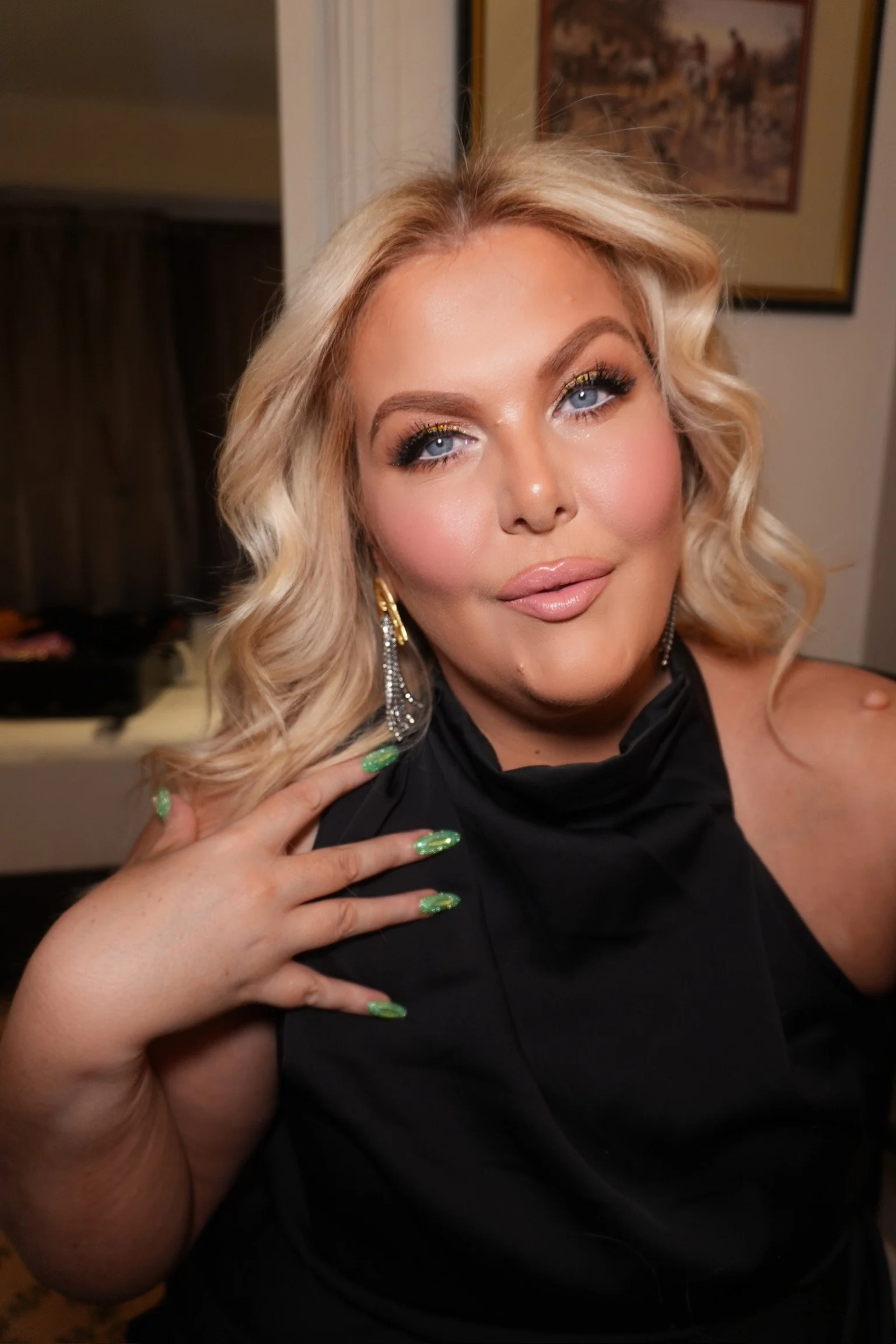
Ellen Malone has been in beauty "since the year that started with a one" — her words, not a typo. She's worked Mac counters, done bridal for two decades, and now she's the reigning Australian and New Zealand Beauty and Fashion Creator of the Year. Oh, and she's also a trained opera singer who's sung at the Sydney Opera House and played the lead role in Carmen.
We covered a lot in this one. Here's what stood out.
Winning Creator of the Year Didn't Feel Real Until Real People Showed Up
The voting period for the award ran about a month, and voters could vote daily, which Ellen says started to feel "really annoying" by the end. But what actually landed for her wasn't the win itself. It was hearing from people afterwards. Nonnas voting. A colleague's entire big Italian family voting. A manager's dad rallying every fruiterer at his local markets.
"When you're working online, you see the numbers, and a big viral video can be six, ten million people. It's a lot of people, but it doesn't feel real. It's really when you see people show out in force, in real life, that you go, wow."
The Real Numbers Behind Influencer Pay
Ellen didn't hold back on this one. She cited figures (from what she referred to as AINCO, the Australian Influencer Council) showing the average full-time female influencer in Australia earns less than $50K. The average male influencer earns around $85K.
Her point: the girl you're annoyed at for tapping her nails on a lipstick bottle is very likely not making a living wage.
"You are currently attacking someone who is making what you make when you work in retail. It's the equivalent of attacking the waitress."
She's careful to note there are real, valid criticisms of the influencer industry — ethical standards, advertising integrity, a lack of regulation. But she wanted to bring a bit of balance to a conversation that's usually one-sided.
Her First Ever Wedding Was Booked in a Public Bathroom
Long before content creation, Ellen was working the kind of jobs that build real skill. Her first paid wedding came from a chance conversation at a public bathroom sink, fixing a stranger's lip liner. She got booked on the spot, despite never having done makeup for money before, and travelled to the job on six buses and a train with a small metal fold-out kit.
She got her start at Mac around age 20, at a time when the brand only hired pro artists and the average age on counter was 35. She had to do makeup on the state manager just to get through the interview, and then work twice as hard to prove herself to a team that assumed she wasn't trained enough.
"All of the greats have worked retail. Makeup by Mario worked retail. Kevyn Aucoin worked retail. It's a training ground where you have to do everybody, under time pressure, without all the colours or products you want."
The Real History of Underpainting
This is where the episode gets genuinely educational. Ellen believes an entire generation of artists were taught highlight and contour wrong, because of a misunderstanding around Scott Barnes's work.
The viral 2012 Kim Kardashian contour selfie, the one that kicked off a wave of YouTube contour tutorials, showed unblended product that was never meant to sit on top of the makeup. It was underpainting: colour placed underneath the foundation, not over it. Placed underneath, contour reads cooler and more like a natural shadow. Placed on top, it tends to read orange.
"When you put light under foundation, it changes the colour, makes it warmer. When you put light on top of the foundation, it goes cooler. Which is why your under-eyes look grey when you do a really light concealer."
She traces the technique further back than Scott Barnes too. Kevyn Aucoin wrote about underpainting extensively in his 90s book, and a lot of the facial mapping behind it comes from the Westmore family, spanning four or five generations of makeup artists.
"We stand on the shoulders of giants."
Why She Stopped Depotting Products Six Years Ago
Ellen packs specific to each job rather than carrying a fully loaded kit. She gets a client selfie, a photo of the outfit, and inspo images ahead of time, then packs exactly what that job needs, plus a couple of emergency items and one backup look.
She stopped depotting products entirely six years ago. Products are stability-tested in their original packaging, and taking them out makes them more likely to go off, plus it creates unnecessary wastage.
One exception always makes the kit: a bright emergency eyeshadow palette, after a mother of the bride once requested green eyeshadow and Ellen was very glad she had it in the boot.
Why Some Stories Never Make It Onto Her Channel
Ellen is firm about client discretion, even when a story would go viral. She referenced the old industry rumour about a makeup artist allegedly leaking details of a celebrity wedding and losing the booking entirely as a cautionary tale, and talked through a recent incident where a makeup artist publicly framed an influencer as "the bad guy" for declining free work in exchange for exposure. Ellen defended the influencer's right to charge for what is, functionally, paid advertising on her own channel, while extending grace to the artist as someone still learning the ropes.
"There are things I would never tell online, even though they'd go viral, because I would never embarrass that client. Your job is to make clients feel safe."
How She Actually Became a Content Creator
Ellen's content career started with COVID. Getting sick early in 2020, before vaccines existed, gave her a "what if I die and never did this" moment. Not long after, she was made redundant, and the only callback from roughly 200 job applications was a small beauty company that needed someone to film TikToks. She didn't know how to film or edit, but talked her way into the role and taught herself both on the job.
She went viral about a week and a half in, on a video her boss didn't want posted, published on a day he wasn't in the office. Realising she wanted to build something for herself rather than a company, she took a second, non-conflicting day job and filmed every single night: shower, blow dry, makeup, film, cook dinner, edit, post, repeat.
Her first full year on her personal account flopped. It wasn't until she stopped chasing trends she didn't naturally do well and instead posted her own take on a viral routine (including underpainting, which she'd assumed was "too fiddly" for online audiences) that things actually took off.
"The more you let yourself be yourself, the better it goes. It's also just much more sustainable."
Ellen's Kit Favourites
At the end of the episode, Ellen walked through what's currently in her kit.
The Anastasia Beverly Hills Exhibit A Magic Touch Blush Trio is an unsung hero, in her opinion. It's extremely pigmented, comes in three shades per palette, works as both lip and cheek colour, and layers beautifully over foundation. The pans are deep enough that she says it lasts.
The Morphe Bronzer in shade Maui Surfs part of Morphe's new rebrand, which she says has genuinely levelled up. It's highly pigmented, blends beautifully, and doubles as a contour, all at an excellent price point for the payoff.
For bridal work, she pairs the Huda Beauty Easy Bake Loose Powder with the new Pressed Powder in Cherry Blossom Cake. The original loose powder is a longtime staple, and layering the new talc-free pressed powder over the top creates an almost cry-proof, humidity-proof finish.
She calls the L'Oréal Infallible 3 Second Setting Mist a widely misunderstood product. It's designed as a light mist over powder, not a soak like some other setting sprays. Used correctly, it seals everything in, prevents transfer, and lasted through a full Mardi Gras night out on one of her clients. It's also half the price of comparable pro brands.
Her most-reached-for mascara, out of an estimated 50 in her kit, is the L'Oréal Panorama Mascara, paired with the L'Oréal Lash Paradise Lash Primer underneath. It gives buildable volume without clumping, costs around $11 on sale at Chemist Warehouse, and the primer underneath helps curl hold and reduces smudging.
For a natural, no-cast glow on any skin tone, she reaches for a clear-base skin tint By Terry Tea to Tan on face, chest and hands, one that doesn't grab onto texture or pigmentation.
And for dry or mature skin that still wants proper glam coverage, her pick is the Clarins Double Serum Foundation in shade L3N. It's a two-chamber foundation you mix yourself, hydrating serum plus pigment, and she rates it as one of the best new releases for skin with fine lines or texture, since it doesn't sit into either.
Listen to the full episode on The Makeup Insider wherever you get your podcasts.